


Deceased Estates and Estate Planning Attorneys in Cape Town
Estate planning is not just about what happens after you die. It is about making deliberate decisions now, while you have the capacity and the opportunity to make them, that will protect your assets, provide for your family, and ensure that your wishes are carried out without unnecessary delay, cost, or conflict. Legal Services Cape Town provides comprehensive deceased estate and estate planning services to individuals and families across the Western Cape, helping clients build estate plans that are legally sound, practically effective, and tailored to their circumstances.


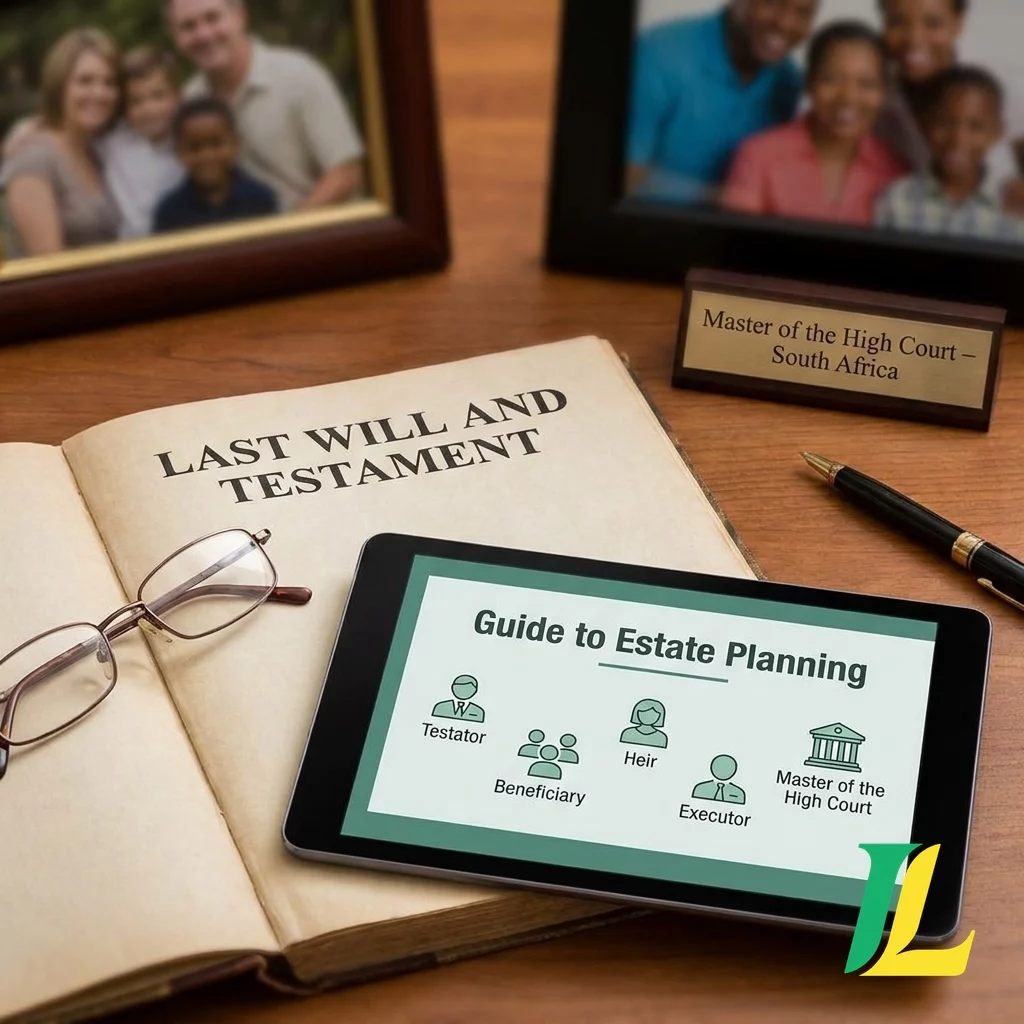
Our deceased estates and estate planning services
We connect you with attorneys who provide support across five core areas of estate and succession law, each handled by attorneys with focused experience in this field.
Drafting of wills
A valid, properly drafted will is the foundation of any estate plan. It ensures that your assets are distributed according to your wishes, that your chosen executor is appointed, and that your dependants are provided for. Without a valid will, your estate is distributed according to the Intestate Succession Act, which may not reflect your intentions at all. The attorneys we refer you to draft wills for individuals and families of all circumstances, ensuring that every will is legally compliant, clearly expressed, and properly executed.
Winding up of deceased estates
The administration of a deceased estate in South Africa is a formal, regulated process governed by the Administration of Estates Act 66 of 1965. The process includes reporting the estate to the Master of the High Court, obtaining letters of executorship, identifying and valuing assets and liabilities, paying estate debts, and distributing the remainder to the heirs. We assist executors and families in navigating this process from start to finish, reducing delays and ensuring that every step is completed correctly.
Estate planning
Effective estate planning goes beyond drafting a will. It involves structuring your affairs to minimise estate duty, protect assets from creditors, provide for dependants with special needs, and ensure continuity of ownership for family businesses and property. The attorney you’re matched with advises on estate planning strategies that take into account their full asset base, family circumstances, and long-term objectives.
Trusts
A trust is one of the most flexible and effective tools available for estate planning, asset protection, and providing for family members over the long term. We advise clients on the appropriate type of trust for their circumstances, including inter vivos trusts established during the client’s lifetime and testamentary trusts created in terms of a will. We draft trust deeds, register trusts with the Master of the High Court, and advise trustees on their ongoing obligations.

Why estate planning cannot wait
Many people put off estate planning because it involves confronting uncomfortable realities about mortality, family dynamics, and the distribution of wealth. The consequences of this delay, however, fall not on the person who delays but on the family members left behind to deal with an estate that was not properly planned.
They attorneys we connect you with will make the process straightforward, practical, and as efficient as possible.
No valid will
Your estate is distributed by statutory formula under the Intestate Succession Act, which may leave a surviving partner without adequate provision.
Avoidable estate duty
Estate duty that could have been minimised through proper planning becomes payable in full when no planning has been done.
Conflict between heirs
Ambiguity in an estate creates space for disputes between family members that can take years and significant legal costs to resolve.
Unprotected assets
Assets that could have been protected through a trust become exposed to creditor claims without the right structure in place.
How we approach dispute resolution
Litigation should always be a considered decision, not a reflex. Before recommending court action, our attorneys assess the strength of your position, the likely costs and timelines, and whether an alternative resolution route might achieve a better outcome with less risk and expense.
Where litigation is the right path, we pursue it with precision. We keep clients informed at every stage and manage expectations honestly, including when the facts require it.
Report the estate to the Master
The deceased estate is reported to the Master of the High Court within 14 days of death.
Letters of executorship obtained
The Master appoints the executor and issues letters of executorship authorising them to act.
Assets and liabilities identified and valued
All assets and liabilities of the estate are identified, valued, and documented for the liquidation and distribution account.
Estate debts paid
Estate debts, taxes, and administration costs are settled before distribution can take place.
Distribution to heirs
The remainder of the estate is distributed to the heirs in terms of the will or intestate succession rules.
Key legislation and regulatory bodies

The official body overseeing the administration of deceased estates and the registration of trusts in South Africa. Central to the estate winding-up process and trust registration procedures we manage on behalf of clients.
 The primary legislation governing the administration of deceased estates in South Africa. Directly relevant to executor duties, the winding-up process, and the role of the Master of the High Court in all estate administration matters.
 Official SARS resource on estate duty in South Africa, including thresholds, rates, and deductions. Relevant to estate planning content covering duty minimisation strategies and the tax implications of different estate structures.