table of contents
- A Straightforward Guide to Drafting a Valid Will and Administering a Deceased Estate in South Africa
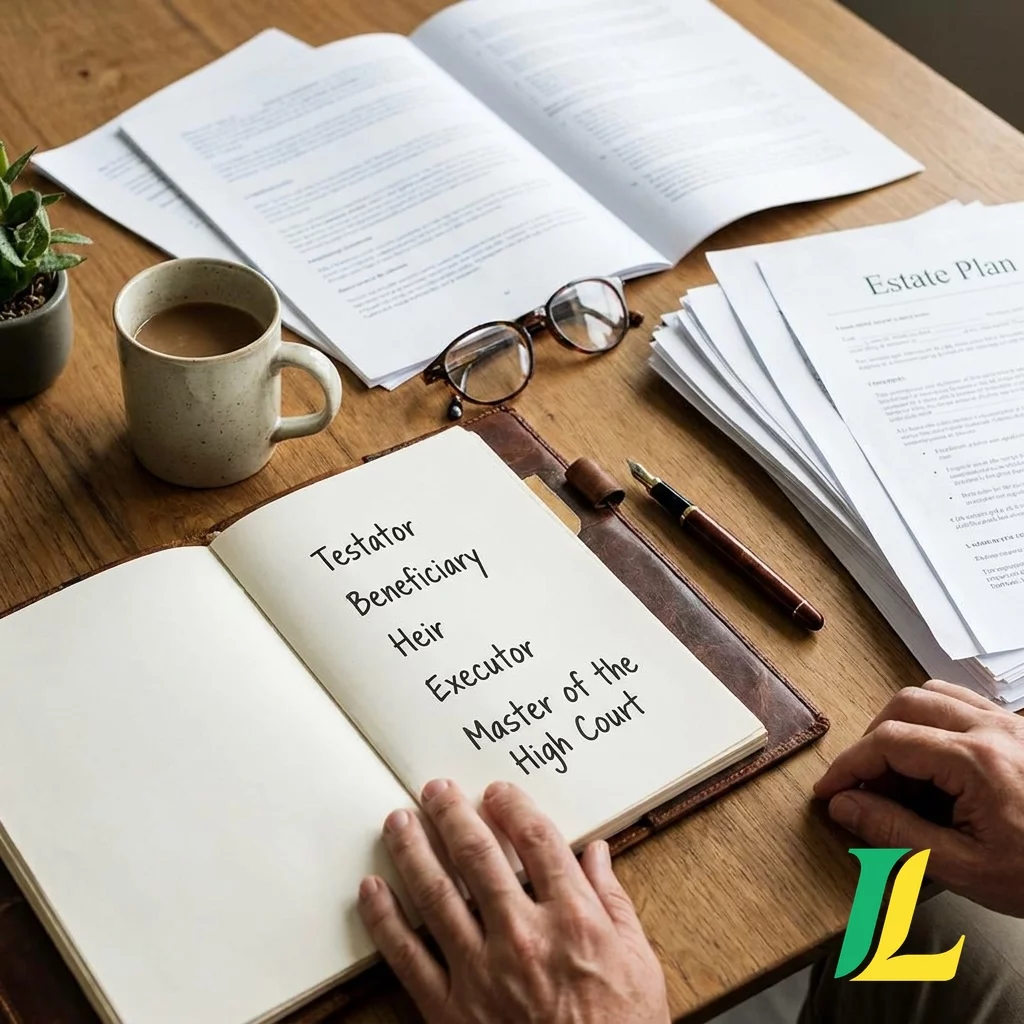
- The People Named in Your Will
- Will Drafting: The People Who Carry Out Your Wishes
- Estate Planning vs Will Drafting: What’s the Difference?
- What Happens If There’s No Will?
- The Master of the High Court and Getting It Right
Will Drafting And Deceased Estates: Understanding the Master of the High Court & Other Key Roles. Who Is Who & Who Does What?
Ask five different people what an “executor” actually does, and you’ll probably get five different answers. Will drafting and deceased estate administration come with a language of their own, and a lot of it sounds interchangeable when it isn’t.
A Straightforward Guide to Drafting a Valid Will and Administering a Deceased Estate in South Africa
A beneficiary isn’t always an heir. An executor isn’t automatically a lawyer. And the Master of the High Court isn’t a judge sitting in a courtroom. If you’re busy writing a will, or trying to work out who’s responsible for what once someone has passed away, getting these roles straight matters. Mixing them up is one of the most common reasons families end up frustrated, delayed, or in disagreement during an already difficult time.
This guide walks through the people involved in drafting a will, planning an estate and settling a deceased estate in South Africa, in plain language, so you know exactly who does what – and how to draft a will that actually holds up.
The People Named in Your Will
What is a testator?
A testator is simply the person who makes the will. If you’re sitting down to write your will, you are the testator. It’s an old-fashioned legal term, but it just means “the person whose wishes this document represents.” Everything in a valid last will and testament flows from what the testator decided while they were alive and of sound mind.
What is a beneficiary?
A beneficiary is anyone named in a will to receive something from the estate – money, property, a car, a share portfolio, sentimental items, whatever the testator chose to leave them. Beneficiaries don’t have to be family. You can name a friend, a charity, or a trust as a beneficiary, provided your will is drafted properly.
What is an heir?
An heir is a specific kind of beneficiary: someone entitled to inherit under the rules of intestate succession, which only apply when a person dies without a valid will. In practice, people use “heir” and “beneficiary” interchangeably, but there’s a technical difference worth knowing, especially if you’re researching dying without a will and how South African law decides who gets what.
Will Drafting: The People Who Carry Out Your Wishes
What is an executor?
The executor is the person (or company) legally responsible for winding up a deceased estate. They’re appointed either in the will itself or, if there isn’t one, by the Master of the High Court. Executors are often confused with attorneys, but they don’t have to be lawyers at all – a family member, a friend, or a professional estate administration service can all serve in this role.
What does an executor do?
An executor’s job is practical and can be time-consuming: reporting the estate to the Master, valuing and safeguarding assets, settling debts and taxes, advertising for creditors, and eventually distributing what’s left to the beneficiaries in line with the will (or the law, if there’s no will). It’s administrative work with real legal weight – mistakes can create personal liability for the executor, which is why many families bring in professional help rather than going it alone.
Can the executor also be a beneficiary?
Yes. It’s actually very common for a spouse, child, or close family member to be named as both executor and beneficiary in the same will. There’s no legal conflict in this on its own, though it’s worth structuring the will carefully so that the roles don’t create tension later. This is one of the reasons proper will drafting is worth getting right the first time.
How do I draft a will correctly?
Drafting a will yourself is legally possible, but how to draft a will that actually holds up is a different question. A valid will needs to be signed and witnessed correctly, use clear and unambiguous wording, name an executor, and account for every asset you own. Getting any of that wrong is exactly how disputes start. Most people find it far safer to have a professional handle the drafting of wills, or at minimum to start from a properly structured will template built for South African law rather than a generic form.
Estate Planning vs Will Drafting: What’s the Difference?
What is a deceased estate?
A deceased estate is the legal term for everything a person owned and owed at the moment they died – property, cash, investments, debts, the lot. It becomes a distinct legal entity that has to be reported to the Master and administered before anything can be handed over to beneficiaries. Read more about how deceased estates are handled in South Africa.
What is estate planning?
Estate planning is the bigger picture: it’s the ongoing process of arranging your affairs – your will, your assets, your beneficiaries, tax exposure, and structures like testamentary trusts – so that everything is handled the way you want, with as little cost, delay, and family conflict as possible. Good estate planning looks well beyond just “having a will”.
What is the difference between estate planning and will drafting?
Will drafting is one task within estate planning, not the whole exercise. Drafting a will puts your wishes into a valid, enforceable document. Estate planning is the broader strategy: minimising estate duty, structuring how minors or vulnerable beneficiaries are provided for, deciding on guardians, and reviewing everything as your life changes. Think of wills drafting as writing the instructions, and estate planning as making sure those instructions actually achieve what you want.
What Happens If There’s No Will?
Who inherits if someone dies without a will?
If there’s no valid will, the estate is distributed according to the Intestate Succession Act, which sets out a fixed order: usually a surviving spouse and children first, then parents, then siblings, and so on down a defined family line. This is often not what the person would have chosen themselves, which is exactly why dying without a will is worth actively avoiding.
What is intestate succession?
Intestate succession is simply the legal name for this default distribution process. It doesn’t consider personal relationships, promises, or family circumstances the way a will can – it applies the same formula regardless of what the deceased might have wanted.
Who appoints the executor if there is no will?
Where there’s no will (or the named executor can’t or won’t act), the Master of the High Court appoints someone, usually a family member who applies for the role, or an independent professional if the estate is disputed or complex.
The Master of the High Court and Getting It Right
What is the Master of the High Court’s role in deceased estates?
The Master of the High Court is the government office that oversees deceased estates, appoints and supervises executors, and makes sure estates are administered lawfully. Every deceased estate in South Africa, whether there’s a will or not, has to be reported to the Master before administration can begin.
Can I choose who inherits my estate?
Broadly, yes – a valid will gives you significant freedom to decide who inherits what. There are some limits (such as maintenance obligations to a spouse or dependent children), but within those, your will is the tool that lets your actual wishes take precedence over the default rules of intestate succession.
When is a will invalid in South Africa?
A will becomes invalid in South Africa when it’s incorrectly signed, missing the required witnesses, or worded so unclearly that it can’t be carried out as intended. An invalid will is treated as if it doesn’t exist, which means intestate succession takes over regardless of what the document says. This is one of the most common – and most avoidable – problems in estate planning, and it’s exactly why professional will drafting matters more than people expect.
Should I get legal advice before writing a will?
Yes, especially where there’s property, a business, blended families, minor children, or anything even slightly out of the ordinary. A short consultation with an estate planning attorney can prevent the kind of ambiguity that leads to disputes, delays, or an invalid will down the line.
Disclaimer
This article is intended as general guidance only and does not constitute formal legal advice. It has been prepared with the assistance of AI tools and reviewed for accuracy, but every estate and every family’s circumstances are different, and South African legislation relating to wills, deceased estates and estate duty can change over time. You should not rely on this page as a substitute for individual legal advice. Before making any decisions about your will or an estate you’re responsible for, please consult a qualified estate planning attorney.
Need help putting any of this into practice? Legal-Services.co.za connects you with independent, qualified attorneys who can assist with drafting or reviewing a will, broader estate planning, or deceased estate administration. Get in touch through our contact form, and we’ll refer you to an independent attorney suited to your matter – free to submit, no obligation.
Legal-Services.co.za is a legal referral platform and not a law firm. We do not provide legal advice directly; we refer users to our partnering independent attorneys, who set and charge their own fees for services rendered.